
Edd Sanders
Email: edward.sanders@stu.mmu.ac.uk
Institution: Manchester Metropolitan University
Supervisor: Dr Jason Hockman
Thesis Title: Critical Listening: Examining Embedded Assumptions of Listening Practices in Passive Acoustic Monitoring
Thesis Summary: This project investigates interdisciplinary collaboration between sound art and acoustic ecology in the use and interpretation of passive acoustic monitoring (PAM) systems. PAM systems embed implicit assumptions about listening, including what counts as a meaningful acoustic signal, the temporal and spatial scales that are prioritised, and which sounds are recorded, processed, and presented. These assumptions shape ecological interpretation yet often remain unexamined. This research addresses this gap by taking embedded listening assumptions in PAM as its central analytical focus, situating them within both acoustic ecology and practice-led sound art.
Research Interests: Relational Bioacoustics; Passive Acoustic Monitoring; Acoustic Ecology; Technological Biases; Environmental Representation; Niche Hypothesis; Field Recording; Listening Assumptions
Emilio Fletcher
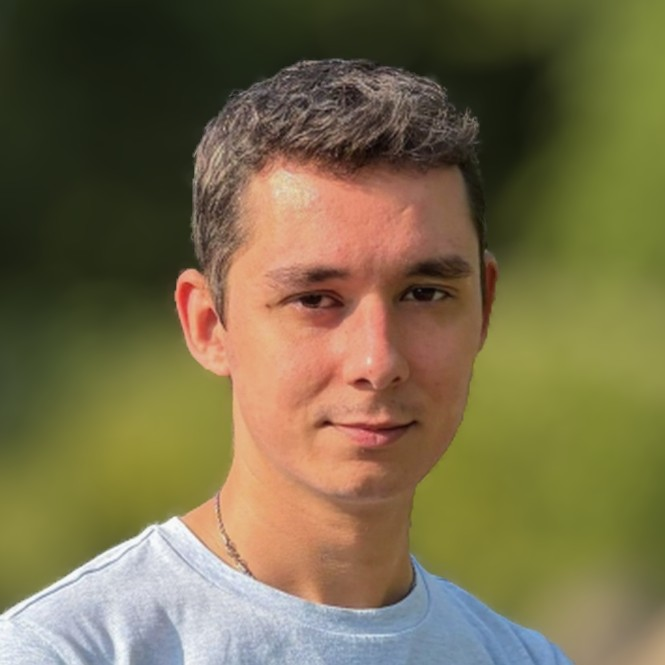
Email: ef1084@york.ac.uk
Institution: University of York
Supervisors: Dr Amelia Gully, Professor Paul Foulkes
Thesis Title: Phonetic and Phonological Variability as a Cue for Manual Deepfake Detection (*working title, subject to slight changes)
Thesis Summary: My project will contribute towards the growing area of manual and explainable detection of synthetic voice clones, also known as audio ‘deepfakes’. The project will explore various aspects of human and synthetic speech, and compare the patterns of variability found within. The core hypothesis of the project is that synthetic speech will show lower levels of variability than human speech due to the statistical techniques and mathematically idealised outputs found in voice cloning technologies. Currently, deepfake detection methods are dominated by highly opaque automatic approaches, and therefore this project focuses solely on aspects of voice, speech, and language which are easily understandable and explainable to lay audiences such as juries, lawyers, police officers, and the general public.
Research Interests: Deepfake Detection; Synthetic Speech; Voice Cloning; Speech Variability; Forensic Phonetics
Eve Messenger
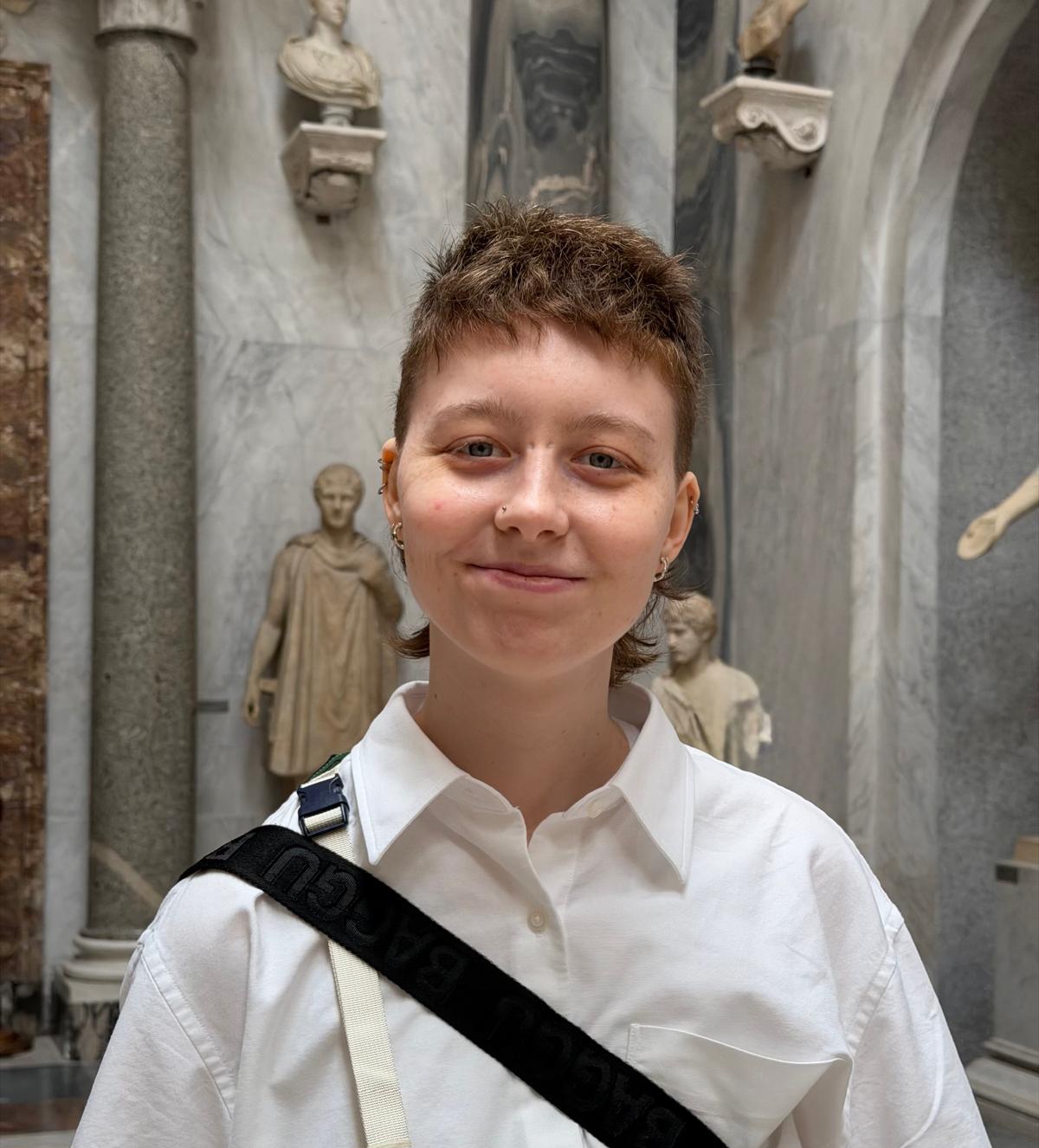
Email: eve.messenger@postgrad.manchester.ac.uk
Institution: The University of Manchester
Supervisors: Dr Michael Sanders, Dr Ingrid Hanson
Thesis Title: Navigating Romantic Hauntologies: Agrarianism and the Ecological Imagination, 1790-1890
Thesis Summary: In alignment with a recent ‘spatial turn’ in literary scholarship, this research uses literary spatial theory to consider the influence of Romanticism’s political ecologies on rural working-class communities and writing over the course of the nineteenth century. It explores Romanticism’s ecological imagination as a lost future, as well as a lost past; this eco-haunting is visible throughout the agrarianism of the nineteenth-century labour movement, and the project examines how eco-political spaces, imagined or otherwise, exist outside of industrial-capitalism’s spatial and temporal geographies. The project reframes Romantic perspectives on ecology and its legacy within the labour movement, and speaks to wider, current debates on environmentalism and conservation.
Research Interests: Romantic Ecologies; Working-Class Ecologies; Nineteenth-Century Working-Class Writing; Hauntology; Spatial Theory
Publications:
- ‘“I had no idea that I was contributing to the rewriting of history”’: Temporality, Hauntological Spectres, and the Time-Travelling Detective in Josephine Tey’s The Daughter of Time’, in Re-reading Golden Age Crime Writing: Time, Space, and Place, Sarah Martin and Stefano Serafini (eds), (Routledge, 2026).
Substack: https://substack.com/@evejmessenger

